Philips Hue has revolutionized home lighting by combining energy-efficient LED bulbs with powerful automation capabilities. Whether you’re scheduling routines, responding to motion, or syncing lights with your daily rhythms, Philips Hue automations bring convenience, safety, and ambiance to any space. This comprehensive guide explores everything you need to know, from core features to real-world applications and real-life examples.
What Are Philips Hue Automations and Why Do They Matter

Philips Hue automations are pre-defined rules that control lighting based on triggers like time, motion, location, or device interactions. By moving past manual control, automations let your home adapt proactively, turning lights on before you enter, simulating sunrise, or adjusting ambiance throughout the day.
Triggers range from scheduled times and groups of lights to motion sensors and phone-based geofencing. Automations run locally on the Hue Bridge for speed and reliability, even during internet outages. With smartphone control, voice assistant integration, and third-party IFTTT support, Hue automations are flexible enough for both novices and power users.
The result? A lighting experience that anticipates your behavior, enhances comfort, reduces energy use, and adds a layer of intelligent home design.
How Philips Hue Automations Work

Hue automations bring together multiple components in a cohesive smart home ecosystem:
-
Hue Bridge and App
The Bridge serves as the brain, storing routines, scenes, and lighting schedules locally. The Hue app provides an intuitive interface for setting up and customizing automations from simple timers to multi-zone triggers. -
Types of Automations
-
Time-based: Set lights to follow a schedule (e.g., mimicking sunrise or adjusting for different days).
-
Sensor-based: Use motion or light sensors to respond dynamically to presence.
-
Location-based (Geofencing): Trigger lights based on a user’s approach or departure.
-
Scene-based: Use custom preconfigured scenes (e.g, “Relax,” “Focus”) within routines.
-
Smart integrations: Use IFTTT, routines with other smart devices, or voice assistants for cross-platform workflows.
-
-
Execution and Reliability
Automations are stored on the Bridge for fast local execution, minimizing delays. Even if Wi‑Fi drops, scheduled routines, motion-triggered lights, and presence-based settings continue to function.
This architecture ensures consistency and responsiveness qualities essential for safety lighting or routines linked to your sleep cycles.
Benefits of Philips Hue Automations
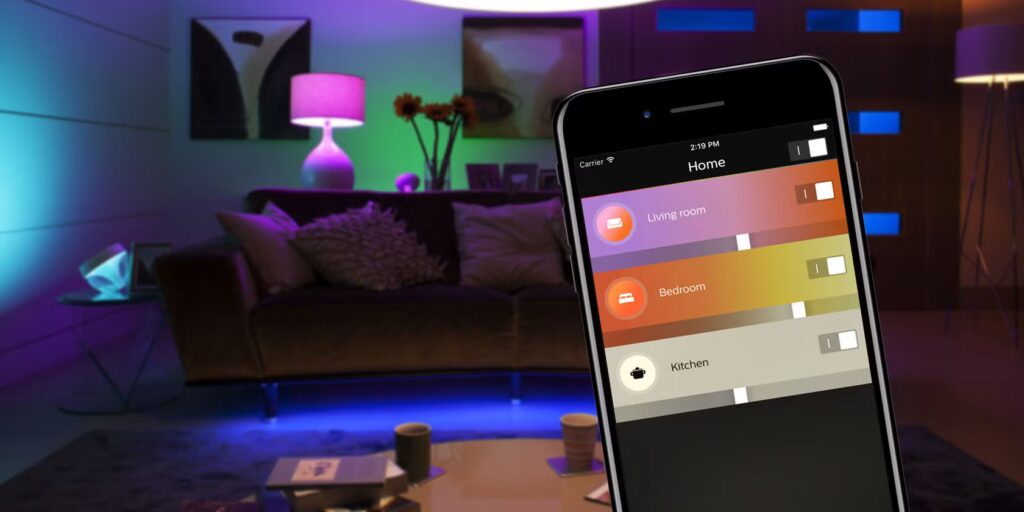
Enhanced Convenience and Comfort
Automations eliminate manual switching. Lights can greet you at sunset in underlights, brighten hallways when midnight hours arrive, or sync to your daily routine, all without pressing a button.
Energy Efficiency and Sustainability
Automations keep lights off when not needed, deactivating them only on presence or time. Over time, this reduces wasted energy and supports eco-conscious living through precise control.
Elevated Security and Deterrence
Scheduled or geofenced lighting simulates occupancy when you’re away. Randomized on/off schedules, especially with outdoor lights, deter potential intruders without you having to lift a finger.
Improved Well-Being Adjusting the lighting color temperature to match circadian rhythms helps support better sleep and productivity. “Wake Up” routines simulate sunrise, while evening dimming routines reduce blue light exposure.
Accessibility and Independence
Voice and sensor-based automations help people with mobility challenges or visual impairments move safely and independently, without needing to find switches.
Real-World Examples of Philips Hue Automations
Motion‑Activated Hallway Lighting
In homes with children or elderly residents, a Hue Motion Sensor combined with GU10 bulbs automatically illuminates the hallway at night. Sensors trigger gentle, low-light scenes during nighttime hours, far less jarring than turning on a bright overhead light.
This setup improves safety and energy usage by ensuring lights are only on during movement.
Sunrise and Sunset Routines with Hue Bridge
Bedroom lights follow defined “Wake Up” and “Go to Sleep” routines using the Hue Bridge. Lights gradually brighten over 30 minutes in the morning, mimicking sunrise, while evening routines slowly dim lights to support relaxation.
Users often cite improved sleep patterns and reduced morning grogginess as key benefits.
Geofencing with Outdoor Hue Installation
Outdoor Hue lights (wall-mounted or path lights) are set to respond to geofencing. As users return home, the bulbs activate softly to guide their path; once they leave, they shut off automatically. These routines enhance curb appeal and arrival convenience.
This automation adds home security with no added manual steps.
Entertainment Sync with Hue Sync Accessories
Hue Sync, in combination with Hue Play Light Bars or lightstrips, automates lighting to match video or audio content. Lights dynamically adjust color and intensity to reflect on-screen activity.
This makes movie nights immersive without any manual configuration between scenes.
Kitchen Task to Ambient Lighting Transition
White Ambiance bulbs are programmed to shift lighting throughout the day. Cool white tones during cooking hours support visibility and concentration, while evening routines trigger warmer hues for a cozy dining atmosphere.
This automation enhances both the practical and emotional atmosphere in a multifunctional space.
Practical Use Cases
Night-Time Safety without Disturbance
Motion-sensor automation in bedrooms and bathrooms removes the need to search for switches at night. Gentle lighting reduces disorientation while maintaining safety.
Problem solved: Fall risk and sleep disturbance due to bright lights.
Real impact: Reduced accident risk and smoother nighttime navigation.
Reducing Energy Waste in Large Homes
Automations ensure that rarely used areas, such as guest bedrooms or basements, only light up when needed. Sensors or schedules prevent lights from being forgotten.
Problem solved: Accidental energy consumption.
Real impact: Significant savings on electricity bills and environmental benefits.
Supporting Workplace Productivity
Home offices feature lighting routines that shift from bright white during peak focus times to softer tones in the late afternoon. These routines are triggered at clock-based intervals or via voice commands.
Problem solved: Eye strain and productivity dips.
Real impact: More alert, focused work sessions and improved satisfaction.
Simulating Presence During Vacations
While away, Hue automations randomly activate indoor and outdoor lights to mimic routine activity. This deters would-be intruders and gives owners peace of mind.
Problem solved: Home unoccupancy risk.
Real impact: Enhanced security with little effort.
Accessible Lighting for All Household Members
Voice-activated routines or sensor triggers let all members, from children to seniors, control lights intuitively and independently.
Problem solved: Accessibility and ease-of-use challenges.
Real impact: Greater autonomy and reduced dependence on physical switches.
Frequently Asked Questions

1. Do Philips Hue automations work without the Hue Bridge?
Basic automations like Wake Up and Sleep routines work with Bluetooth. However, advanced features such as multi-room orchestrations, geofencing, motion sensors, and third-party integrations require the Hue Bridge.
2. Can I have different routines for different users?
Yes! Using the Hue app, you can create personalized routines within the Bridge that include location-based triggers. These can be tailored per user, ensuring each person’s preferences are maintained.
3. What happens if Wi‑Fi or the internet goes down?
Automations stored in the Hue Bridge act locally, so scheduled routines and motion-triggered events typically continue uninterrupted even without internet or Wi‑Fi.
Conclusion
Philips Hue automations elevate your daily environment, delivering a smart lighting experience tailored to your life. From hands-free navigation to sleep-enhancing routines and entertainment ambience, the impact is tangible, smart, and sustainable. By choosing the right components and setting thoughtful automations, you unlock a truly intelligent home lighting system—one that supports wellbeing, security, and convenience at every turn. Harness Philips Hue automations today and let your home light itself intelligently.