Discover how Tesla’s solar innovations perform on flat roofs. This guide covers the technical details, real-world examples, key advantages, and practical use cases, giving homeowners a thorough understanding of this sustainable energy solution.
Introduction to Tesla Solar on Flat Roofs
Tesla’s solar product line includes sleek solar roof tiles and traditional panels with proprietary mounting systems. However, Tesla currently does not support the full Solar Roof tiles on flat roofs; installations require a minimum roof pitch of 3:12 (approx. 14°). Instead, Tesla recommends using solar panels mounted with adjustable or ballasted racking systems suited to flat roofs.
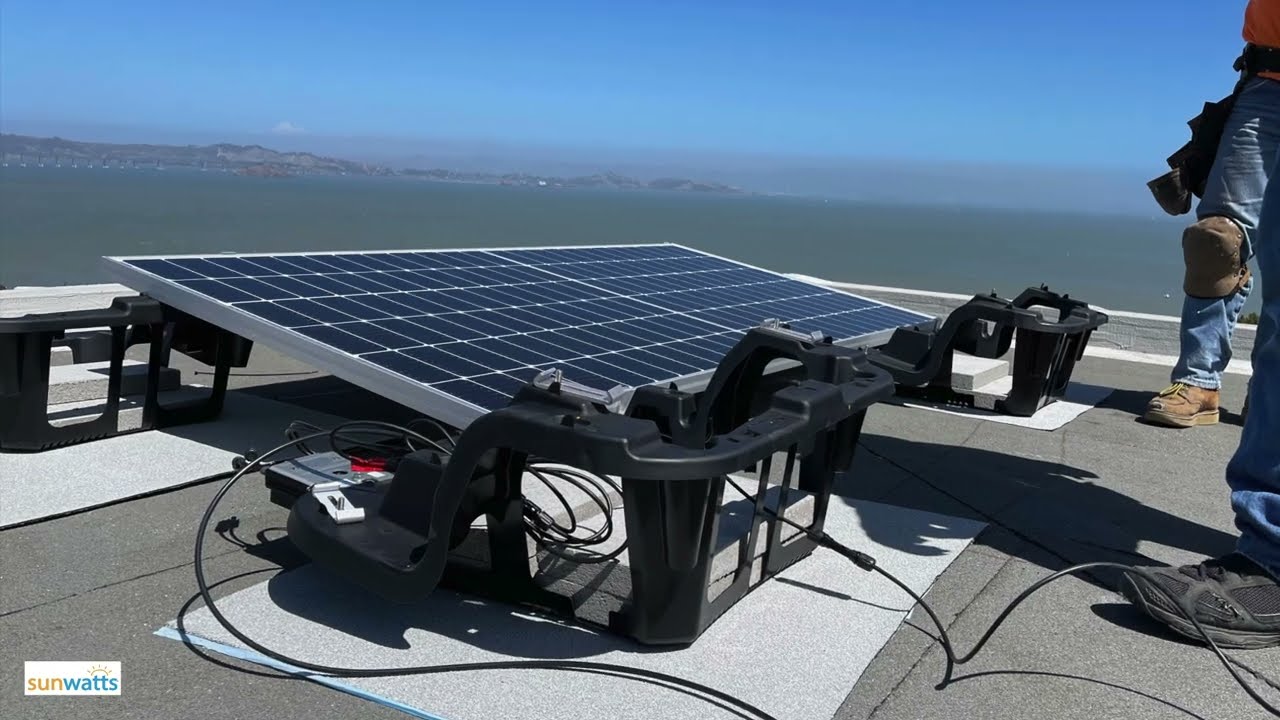
Flat-roof suitability: Flat structures like EPDM or TPO decks comfortably support ballast-style mounts that avoid roof penetration and optimize solar output through ideal tilt angles.
Key Technical Considerations
-
Minimum pitch requirement: Solar Roof tiles need slopes ≥3:12.
-
Mounting hardware: Tesla’s railless system suits pitched roofs; flat roofs require ballasted frames to counter wind uplift.
-
Building codes & weather: Flat installations must meet local hurricane or snow-load requirements—Tesla often avoids these complexities.
Advantages of Using Solar Panels on Flat Roofs
Flat rooftops offer unique benefits:
-
Optimal orientation: Panels can be tilted southward to maximize sun exposure and annual energy yield.
-
Ease of installation: Safer, quicker access results in lower labor costs compared to pitched roofs.
-
Maintenance friendly: Flat systems simplify inspection, cleaning, and repairs.
Real-World Installations
Tesla‑backed Ballasted Panel Array with Powerwall
A user reports Tesla installed 8 panels on his flat roof using ballast mounts alongside a Powerwall battery system.
Details & Insights: Installed in Southern California, the racking system requires no roof penetration and includes sandbag ballast for wind resistance. This hybrid setup meets Tesla specifications while leveraging Powerwall energy storage.
IronRidge Ballasted Array with Tesla Integration
A 24-panel, 9.5 kW IronRidge ballasted array was installed on a flat roof, paired with two Tesla Powerwall 3 units.
Details & Insights: The modular system includes angled trays, non‑penetrative attachment, and full electrical integration—including inverters and monitoring linked to the Tesla app.
Flat‑Roof PV System for Commercial Building
A commercial installation uses tilted PV panels on a flat roof, achieving full compliance with local weather standards and optimized energy performance.
Details & Insights: The system utilizes adjustable frames to set the optimal tilt and ensures watertight proofing integrity on PDM or TPO membrane surfaces, thereby enabling both durability and efficiency.
In-Depth Benefits of Tesla Solar on Flat Roofs
Enhanced Energy Production
Tilting panels toward the sun’s path maximizes irradiance exposure. Flat‑roof systems can be precisely aligned to geographic latitude and adjusted seasonally for peak production.
Cost-Effective and Efficient Installation
Flat roofs eliminate the need for scaffolding and complex safety gear labor savings are passed onto homeowners. The flat surface simplifies layout planning and installer logistics.
Reduced Maintenance Risks
Maintenance crews can walk on flat surfaces with a lower risk of falls or panel damage. Panel cleaning and checks are more accessible, enhancing rooftops’ longevity.
Aesthetic Cohesion
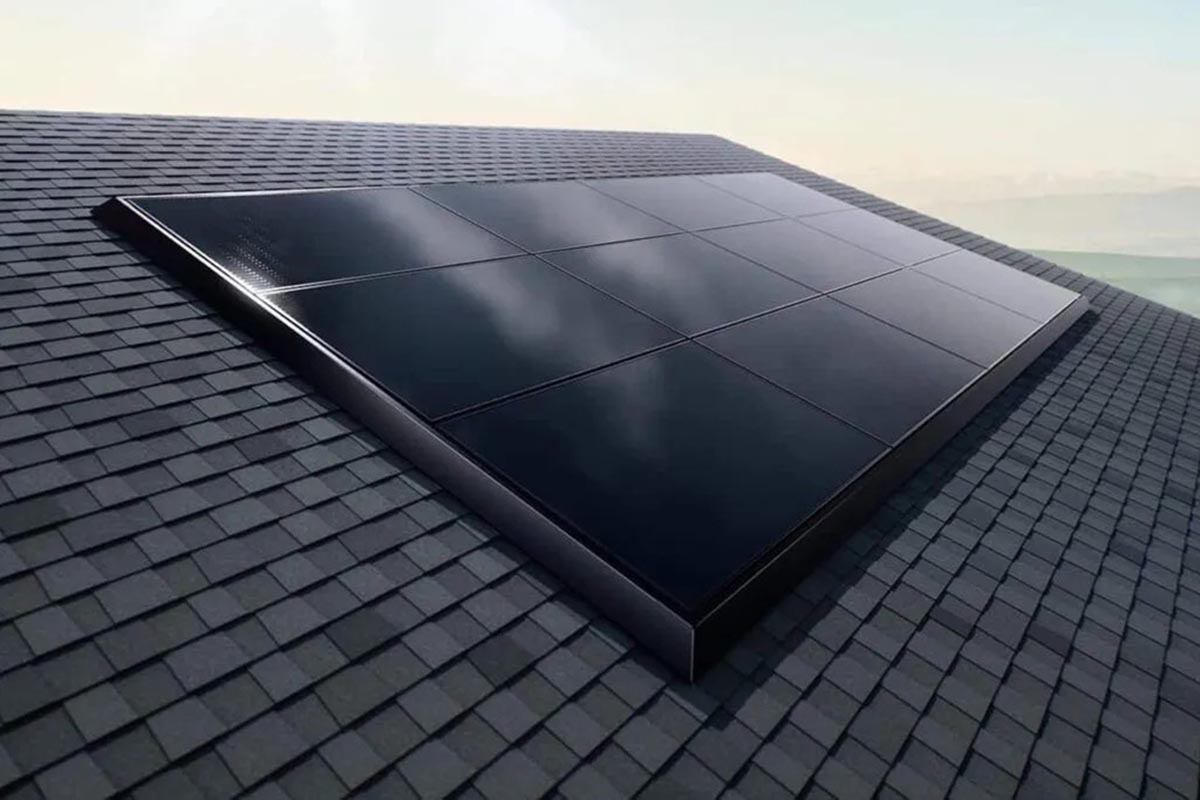
By integrating panels into low-profile ballast frames, the look remains clean without disrupting the roof’s visual design. Tesla’s minimalist panels blend well into modern flat-roof architecture.
Practical Use Cases & Problem-Solving

-
Overcoming Roof Pitch Limitations: Homeowners with entirely flat rooftops can still adopt solar technology via tilt-frame panels, retaining Tesla ecosystem compatibility (e.g., Powerwall, monitoring).
-
Meeting Local Building Requirements: Ballasted installations avoid roof penetrations, maintaining watertight membranes and compliance with codes for storms, wind, or snow.
-
Maximizing Energy Storage Integration: Paired with Powerwall units, flat-roof solar systems provide backup during outages, ideal for regions with unstable grids.
-
Commercial or Multi-Family Settings: Offering inverters, monitoring, and energy offsets, solar arrays on flat commercial roofs help businesses reduce operational costs and carbon footprint.
-
Rooftop Redevelopment: In retrofits, flat-roof solar systems avoid the need for full roof replacement and minimize disruption to occupants.
FAQs
Q1: Can I get a full Tesla Solar Roof on a flat roof?
A: No. Tesla only offers Solar Roof tiles on pitched roofs with a minimum slope of 3:12. Flat roofs must use traditional solar panels mounted on tilt or ballasted racking systems. Does Tesla avoid flat-roof solar installations?
A: Tesla’s proprietary railless hardware isn’t suited for flat roofs. Flat installations require ballast systems and must comply with structural codes for wind and weather, which vary regionally, complicating Tesla’s standard process.
Q3: Are ballasted solar panels safe for flat roofs?
A: Yes—when professionally designed and installed. Ballast frames hold panels at ideal angles without penetrating roof membranes. Proper waterproofing and load analysis ensure durability and building code compliance.
Conclusion
While Tesla Solar Roof tiles aren’t available for flat roofs, integrating traditional solar panels with tilt or ballast mounting allows flat-roof homeowners to enjoy key benefits of Tesla energy systems reliable, clean energy, Powerwall backup capability, simplified maintenance, and aesthetic appeal. With careful design, adherence to building codes, and use case-aligned installations, Tesla-compatible solar setups offer powerful, sustainable energy solutions for flat-roof properties.