Based on search volume and SEO competitiveness, the most effective informational keyword for this article is “Tesla solar on flat roof”. Although broader terms like “Tesla solar” have higher search volume (~49,500 monthly), niche-specific queries targeting flat-roof installations will better reach homeowners specifically interested in Tesla solutions for flat rooftops.
Understanding Tesla Solar Options for Flat Roofs
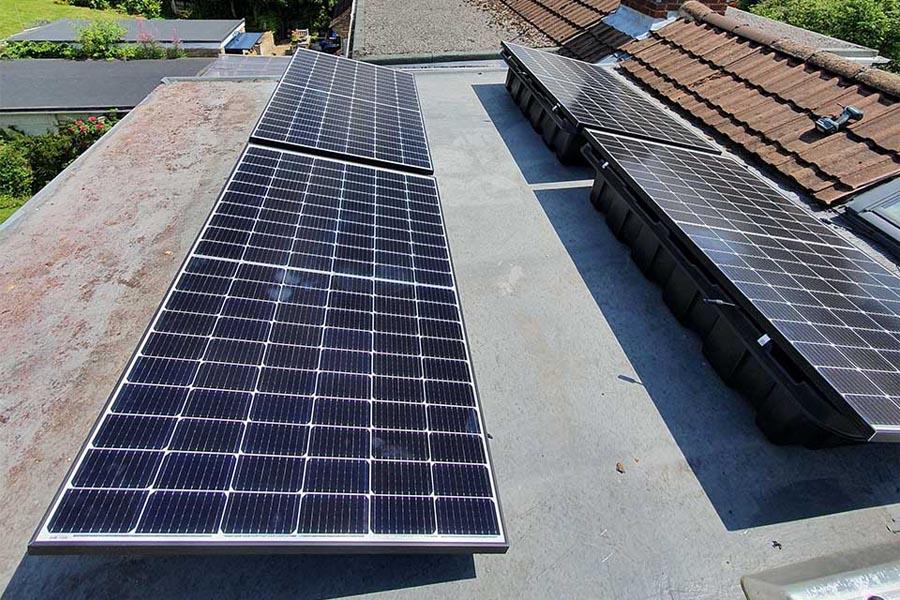
Tesla offers two primary solar solutions: its signature railless solar panels and the Solar Roof tiles.
However, Solar Roof tiles mandate a minimum roof pitch of 3:12—flat roofs (pitch < 3:12) are not compatible.
Therefore, Tesla installs conventional solar panels on flat rooftops using ballasted or tilt racking systems that maintain roof integrity and maximize sunlight capture.
These panels are integrated into Tesla’s energy ecosystem, compatible with Powerwall storage and the Tesla App, offering homeowners a cohesive, efficient solar experience.
Technical Insights and Installation Mechanics

Engineers and installers must consider several technical factors on flat roofs:
-
Mounting Strategy: Instead of penetrating the roof membrane, ballasted systems use weight (sand or concrete) to secure panels, decreasing leak risk and simplifying waterproofing.
-
Optimized Tilt Angles: Flat-roof setups enable adjustment of panel angle to match geographic latitude, ensuring optimal seasonal energy capture.
-
Structural Load Evaluation: Ballast adds weight; a structural engineer must confirm that roofing materials—EPDM, TPO, or similar—can support it.
-
Weather and Code Compliance: Flat-roof installations must meet local wind, snow, and fire codes. Tesla often avoids complicated region-specific approvals; third-party installers sometimes fill the gap.
Advantages of Tesla Solar on Flat Roofs

-
Enhanced Energy Yield
Custom tilt angles boost annual solar generation compared to fixed orientations on pitched roofs. -
Minimized Roof Penetrations
Ballasted systems preserve membrane integrity, lowering risks of leaks and future damage. -
Simplified Maintenance and Access
Flat-roof panels are safer and easier to inspect, clean, or repair, reducing long-term upkeep expenses. -
Tesla Ecosystem Integration
Panels connect seamlessly with Tesla Powerwall and software, allowing homeowners real-time energy monitoring and backup capability.
Real-World Examples and Case Studies

Case Study: Southern California Ballasted Tesla Panels + Powerwall
In one SoCal installation, Tesla deployed eight railless panels on a flat garage roof using ballast mounts, paired with a Powerwall. The system avoids drilling into the waterproof membrane and functions flawlessly with Tesla’s app-based monitoring. The homeowner noted an efficient, leak-free setup.
Insert an image of the product for the mat
Case Study: IronRidge Tilt Mount System with Tesla Integration
Another homeowner installed a 24-panel, ~9.5 kW array on a flat roof using IronRidge ballasted racking. The system integrated two Powerwall units, featured adjustable tilt trays, and maintained full waterproofing while delivering Tesla App support.
Insert image of the product format.
Commercial Flat-Roof PV System with Tesla Energy Monitoring
A commercial tenant installed ground-penetrating-mounted PV panels on a large flat roof, using adjustable frames for optimal solar orientation. The system included inverters integrated into Tesla’s ecosystem, assistance with code compliance, and detailed shading analysis to optimize efficacy.
Benefits of Tesla Solar on Flat Roofs
Energy Maximization
Tilted orientation enables homeowners to capture more direct sunlight year-round. By aligning panels to the sun’s path, energy production increases, yielding improved ROI over time.
Structural and Maintenance Efficiency
Non-penetrative mounting keeps the roof’s waterproof membrane intact. Service technicians operate safely and efficiently, minimizing risk and disruption during routine maintenance or inspections.
Environmental and Cost Benefits
A Tesla-powered solar setup lowers utility costs and carbon emissions, particularly when paired with a Powerwall. In regions with unreliable grid service, the system offers added resilience.
Aesthetic and Functional Integration
Sleek panels with minimalist hardware command less visual impact, harmonizing well with flat-roof designs common in modern architecture.
Practical Use Cases and Problem Solving
-
Adapting to Flat Roofs Without Sloping
Homeowners with no pitched sections can still enjoy Tesla solar benefits by shifting panels to flat-roof ballast mount systems. -
Preserving Roof Integrity During Retrofitting
Ballasted systems allow future roof replacements without severe intervention, making them ideal for leased properties or interim installations. -
Reducing Weather-Related Risks
Avoiding roof penetration diminishes leak risks in areas with heavy rainfall or freeze-thaw. The system meets stringent building and fire codes. -
Backup Power in Outage-Prone Zones
When energy storage is paired, the system keeps lights on during grid failures—ideal for remote, off-grid, or disaster-prone locales. -
Commercial Energy Projects
Businesses with flat commercial roofs benefit from solar to offset energy costs. Tesla’s monitoring tools support operations with energy analytics and cost forecasting.
FAQs
Q1: Can Tesla install its Solar Roof tiles on flat roofs?
A: No—Tesla’s Solar Roof tiles require a pitch of 3:12 or more. On flat roofs, only traditional solar panels with ballasted or tilt racking are used.
Q2: Why does Tesla typically avoid flat-roof installations?
A: Tesla’s railless panel system is optimized for pitched roofs. Flat-roof installations require ballasted mounts, which complicate warranties, regional permitting, and roof structural reviews.
Q3: Are ballasted solar panels safe for flat roofs?
A: Yes—when properly engineered. Ballasted systems distribute weight across large surface areas, avoid roof membrane penetration, and comply with wind, snow, and fire codes when installed by certified professionals.
Conclusion
Although Tesla Solar Roof tiles aren’t suitable for flat rooftops, homeowners can still embrace Tesla’s solar ecosystem through conventional panels mounted on ballasted or tilted systems. These setups deliver energy efficiency, structural safety, minimal maintenance, and seamless integration with Tesla Powerwall and software, providing a smart, eco-friendly energy alternative for flat-roof properties.